
Grounding Techniques for Anxiety, Trauma & Emotional Overwhelm
Simple practices to help you feel safer and more present
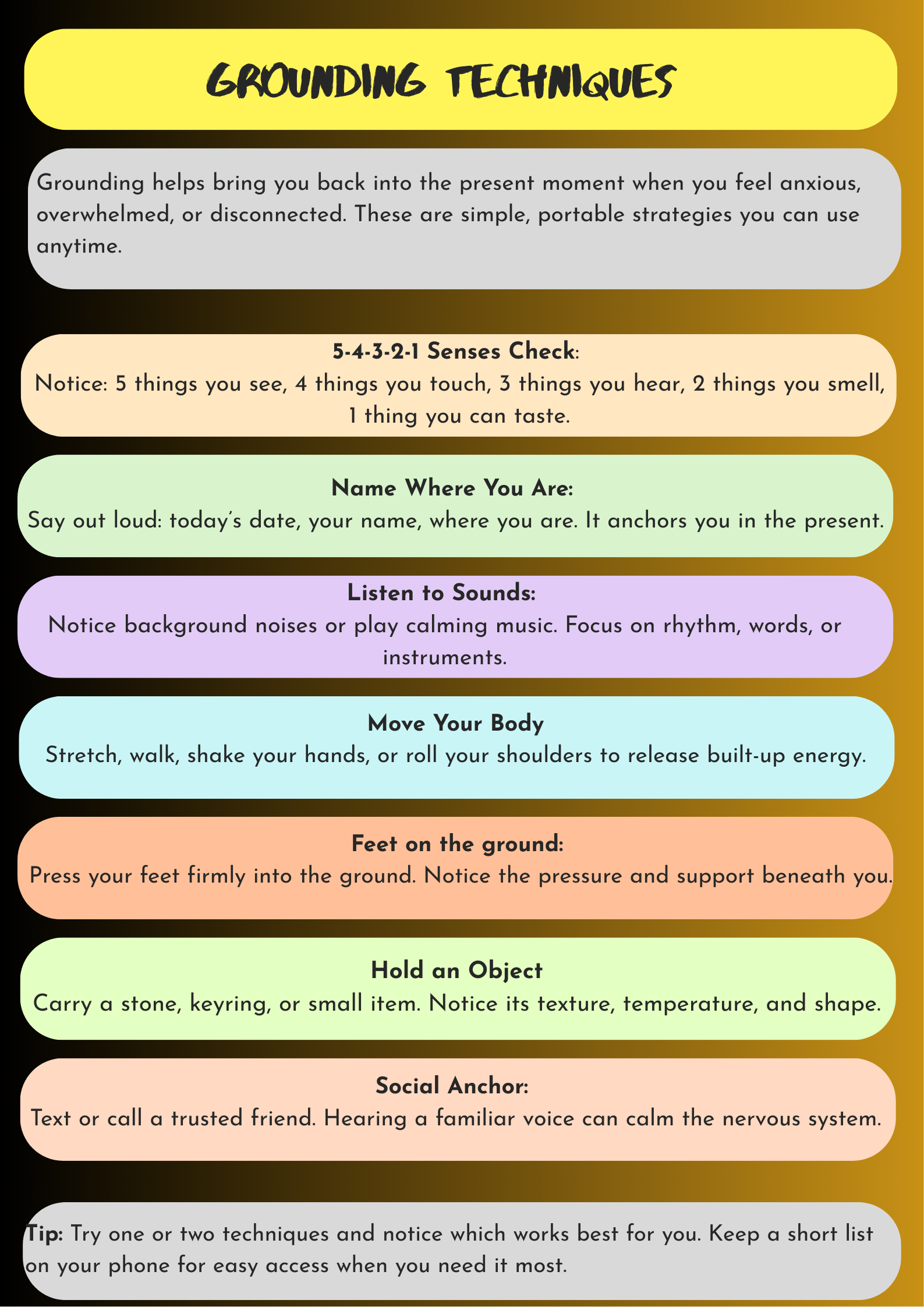
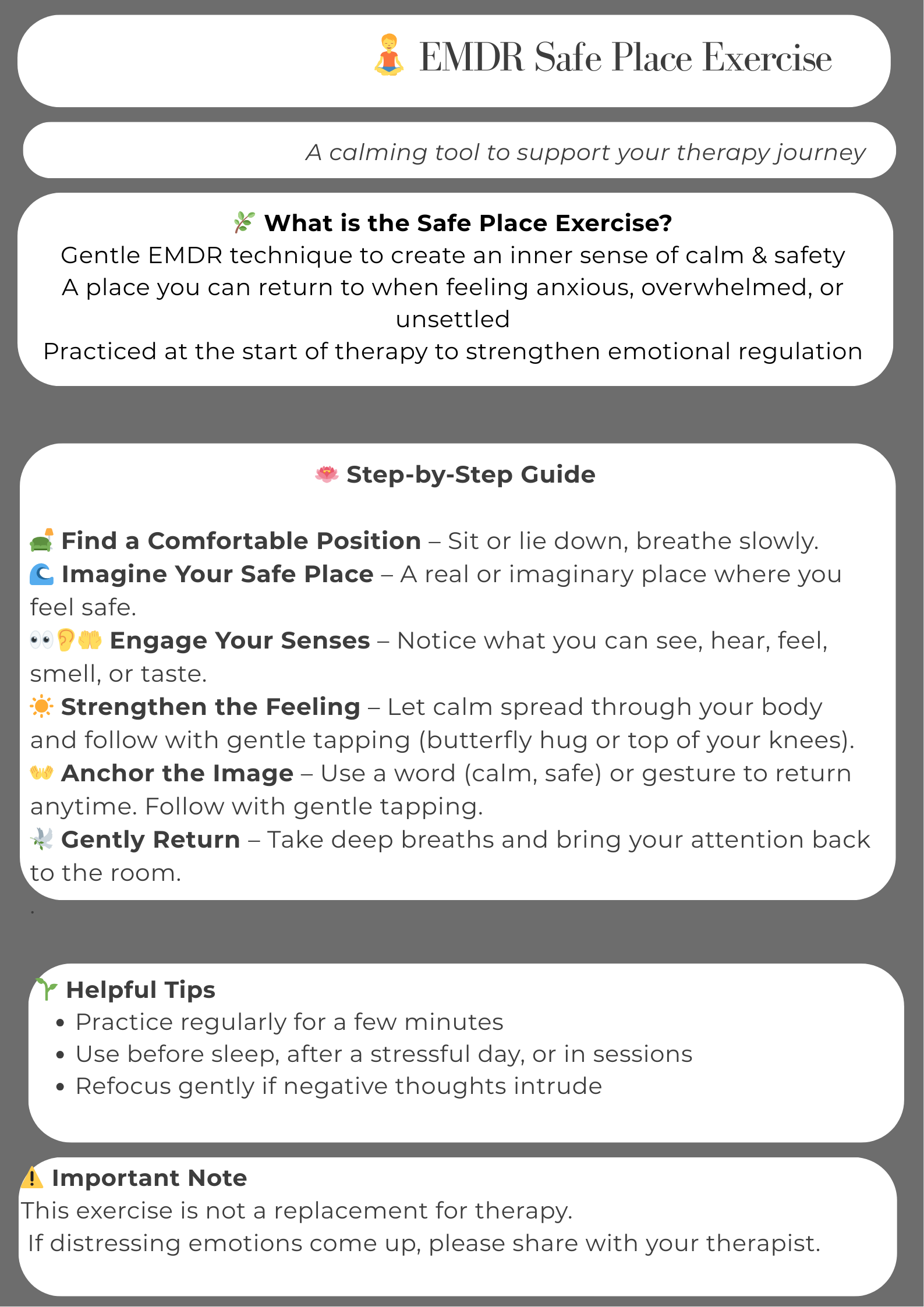
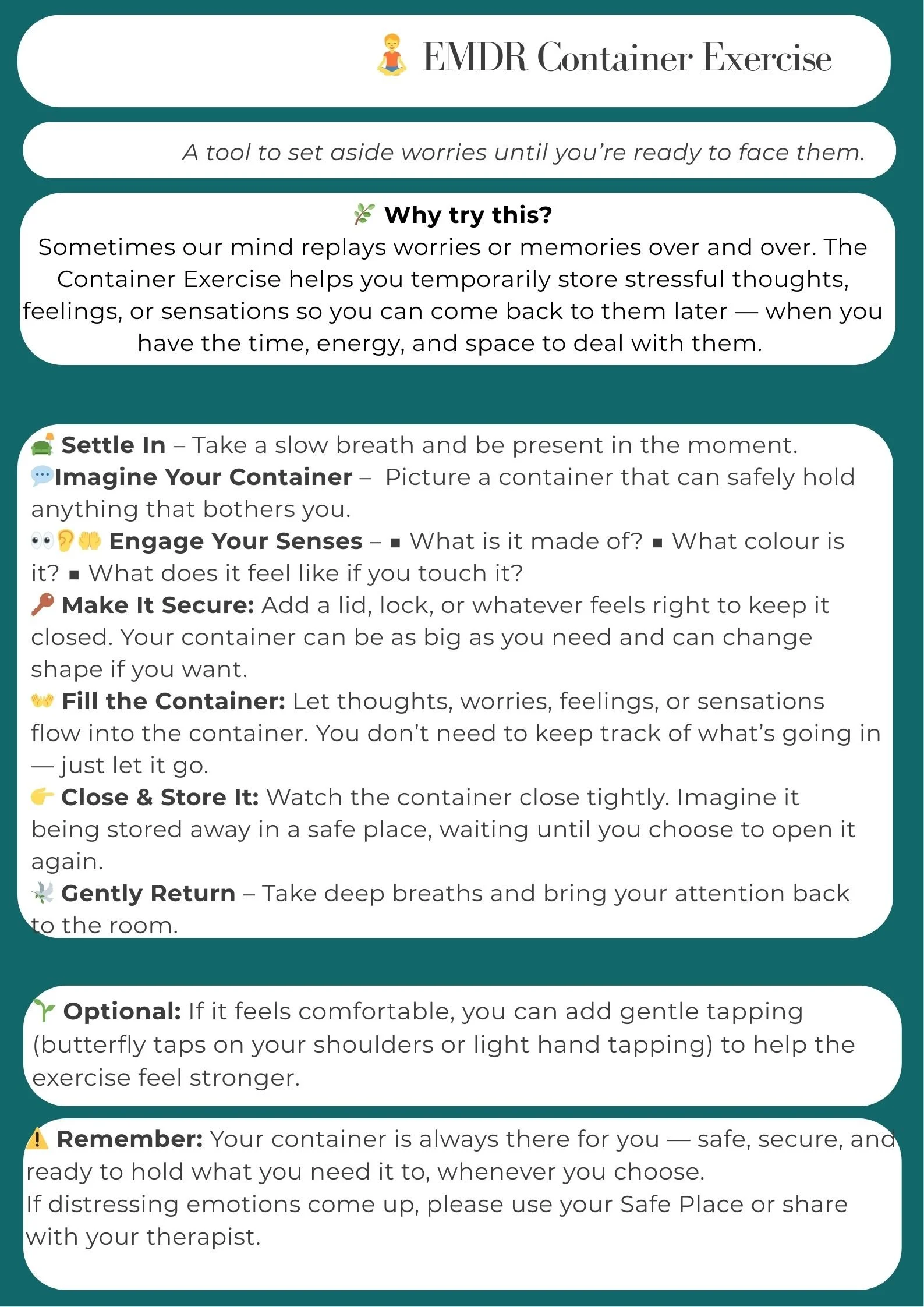
Grounding techniques can help you feel more present and in touch with emotions and your physical body - particularly useful when trauma responses take over. This page brings together simple, trauma-informed grounding exercises, guided practices, and free tools you can use in everyday life. These can help you overcome panic and feel safe again.
Try this now
Take one slow breath and notice your feet on the ground. If this feels too much, keep your eyes open, look around the room, or focus on one steady object nearby. You are allowed to stop at any time.
Choose what you need right now:
I feel panicky or anxious: start with breathing, orienting and sensory grounding.
I feel spaced out or disconnected: try grounding through touch, movement and naming where you are.
I feel emotionally flooded: start with slow movement, self-soothing and coming back to the room.
A trauma-sensitive note on Grounding
Grounding should feel supportive, not forced. If closing your eyes, focusing on your breath, or noticing body sensations makes you feel more anxious or disconnected, you can adapt the practice.
You do not need to do grounding perfectly. The aim is not to force calm, but to gently remind your mind and body that you are here, now, and not alone.
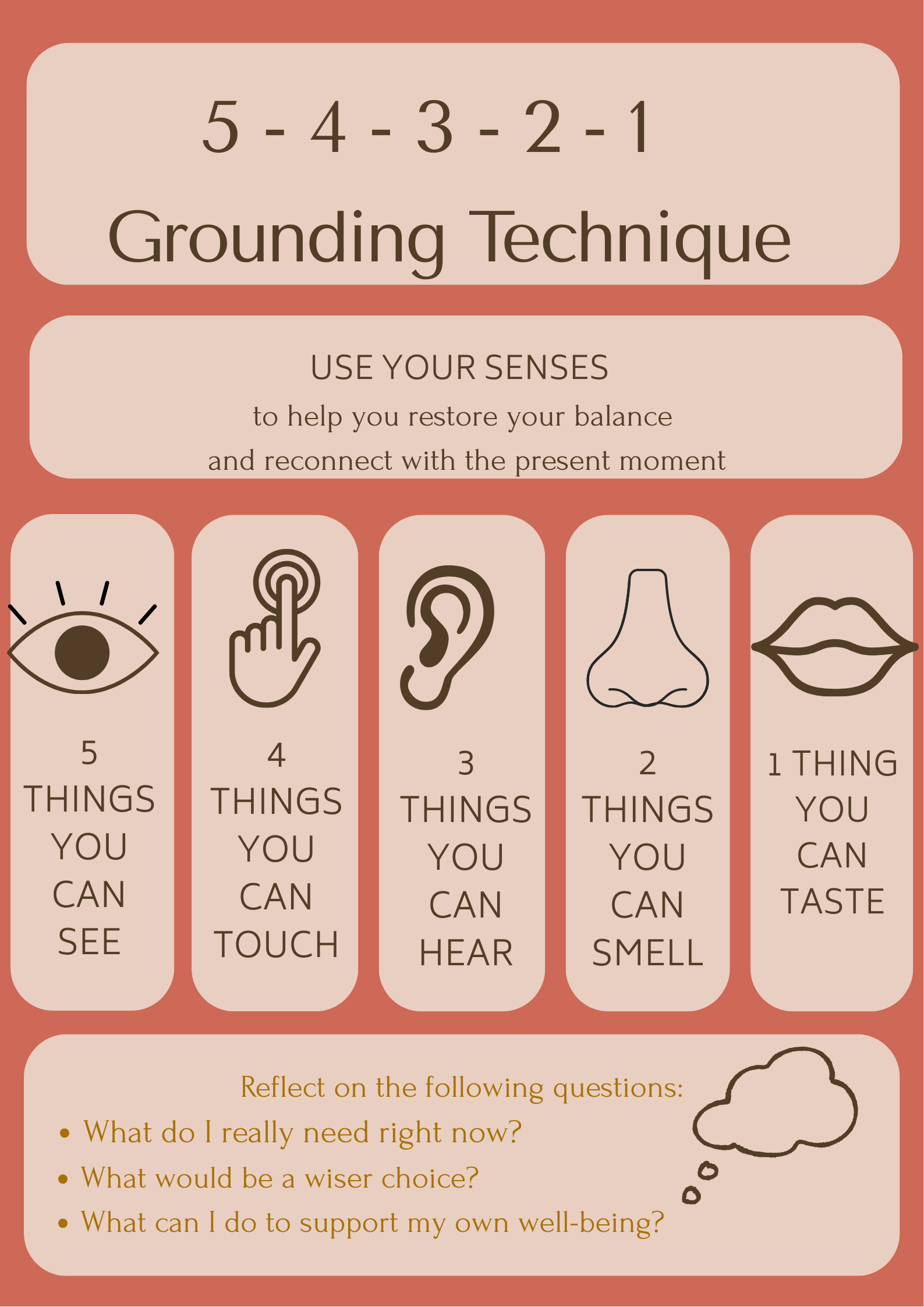
5-4-3-2-1 Grounding
If you feel overwhelmed, gently look around and name:
5 things you can see 4 things you can feel 3 things you can hear 2 things you can smell 1 thing you can taste
Find detailed instructions here
Not sure where to start?
New to grounding techniques? Learn about emotional regulation.
Keep getting pulled into the past? Learn about dangers of unprocessed trauma.
Curious how to overcome self-criticism? Explore healing your inner child.

Regulating Emotions Through Movement: Finding Your Own Way
Movement doesn’t have to be about performance or fitness goals. At its core, it’s about self-regulation – finding ways to manage stress and gently reset.
Free Grounding Tools and Worksheets