Self-Compassion Resources for Self-Criticism, Comparison & Perfectionism
ACT-based tools, guided practices and therapy insights for becoming kinder to yourself
If you tend to be hard on yourself, compare yourself to others, or feel like nothing you do is ever quite enough, you’re not alone. Self-compassion is not about letting yourself off the hook — it’s about learning to relate to yourself with more understanding, especially when things feel difficult.
This space brings together practical tools and guided practices to help you move beyond self-criticism, comparison and perfectionism.
Try this now
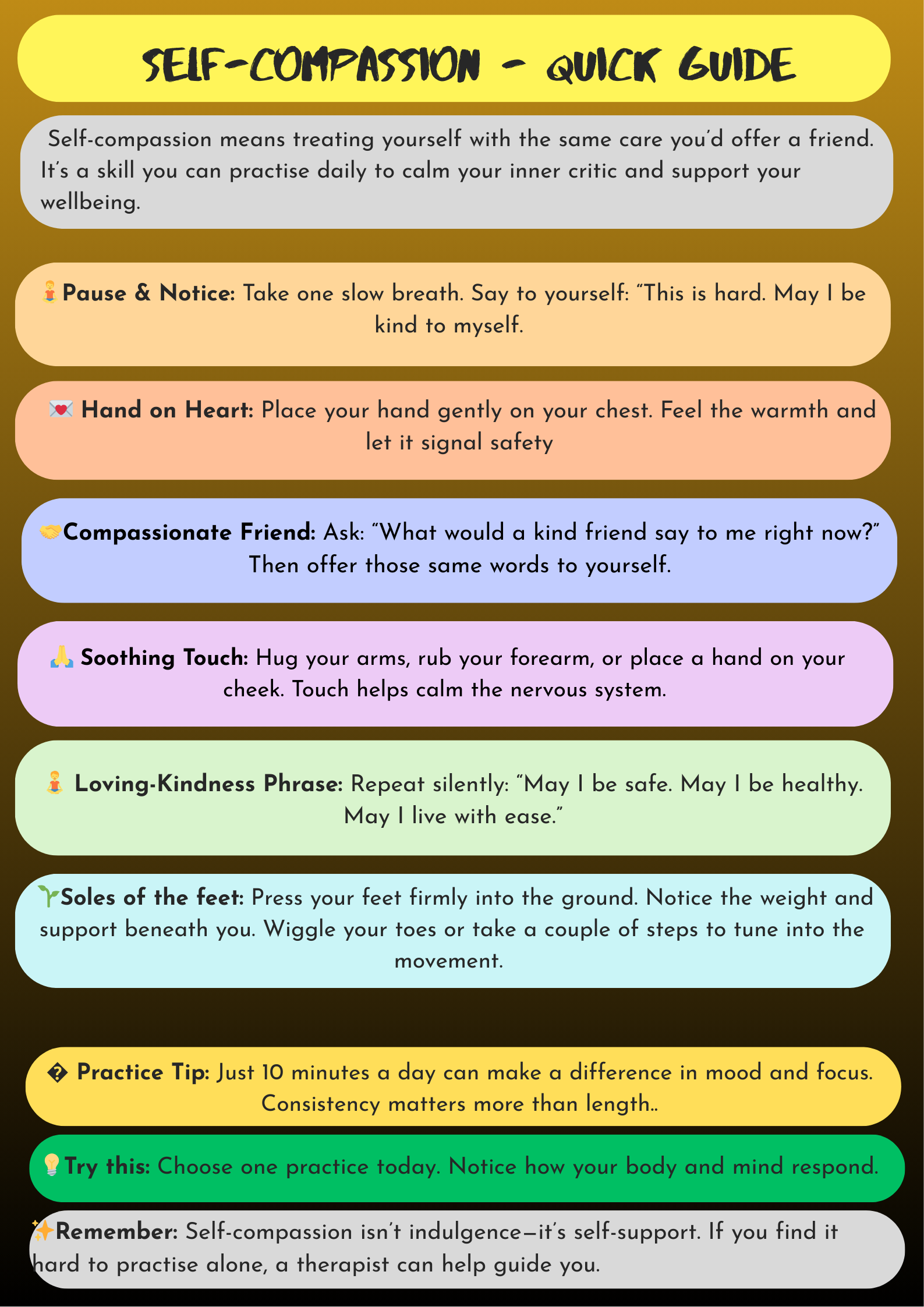
Try this now: a kinder inner voice. Take a moment and ask yourself: What am I feeling right now? What am I telling myself about this? Would I speak this way to someone I care about? What would be a kinder, still honest, way to respond?
Then try saying: This is hard right now. I don’t have to attack myself to grow. I can meet this moment with honesty and care.
When self-compassion feels hard to practise alone
Self-compassion can sound simple, but it is not always easy, especially if you have spent years being driven by self-criticism, perfectionism, shame or fear of disappointing others.
Acceptance and Commitment Therapy (ACT) can help if you’re feeling stuck in patterns. Rather than trying to get rid of difficult thoughts and feelings, ACT helps you respond to them differently, so you can make choices based on your values rather than fear or pressure.
Self-Compassion Practices and Guided Exercises
Not sure where to start?
I feel like I’m never enough: start with self-compassion and perfectionism article.
I want something practical: begin with ACT tools like the Choice Point and simple guided practices.
I know I should be kinder to myself, but I can’t: read about backdraft and why self-compassion can sometimes feel difficult.

Backdraft - When accepting Ourselves Becomes Most Difficult…
The idea of accepting ourselves is often presented as a cornerstone of wellbeing. Yet, in practice, many find that it is precisely in the moments when they most need self-acceptance that it feels utterly out of reach. Why does extending compassion inward so often feel more threatening than soothing?

The science behind self-compassion: how kindness to yourself changes your brain
We all know that small unpleasant voice: “You should have done better” . For many people that voice is habitual — loud, sticky, and unhelpful. Self-compassion is a different way of responding and it’s also one of the best-studied, science-backed ways to reduce self-criticism and improve emotional resilience.

Shooting the Second Arrow
There’s a teaching from the Buddhist philosophy that has shaped the way I think about suffering, both in my own life and in the lives of the people I work with. It’s called the parable of the two arrows...

The Hidden Costs of Comparing Ourselves to Others – And How to Break Free
It’s a familiar feeling: scrolling through social media and seeing others who seem happier or more successful. Almost instantly, we compare ourselves. For a moment, this might motivate us—but often it leaves us feeling smaller and stuck in cycles of low self-esteem. Let’s explore this and what steps we can take to build healthier ways of valuing ourselves.
Free Self-Compassion Tools and Worksheets